Prof. Isabelle De Groote
My research centres on the biological and behavioural evolution of humans, with a particular emphasis on Neanderthals, early modern humans, and the transition periods of the Mesolithic and Neolithic. I have led and collaborated on numerous national and international projects investigating those prehistoric but also throughout human history. These include archaeological fieldwork and analysis of key archaeological sites, where our findings contribute to understanding human lifeways throughout prehistory and historical periods in what is now Belgium.
Earlier in my career, I focused on functional morphology, notably the biomechanics of Neanderthal limb bones, and pioneered the use of 3D geometric morphometrics in long bone analysis—an approach now widely adopted in physical anthropology. My commitment to methodological innovation continues through collaborations with experts in physiology, anatomy, and primate biology, enriching our understanding of human adaptation.
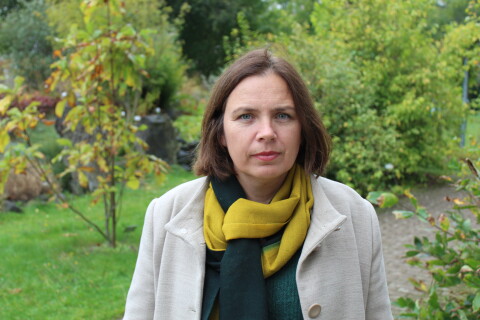
I have published extensively in international peer-reviewed journals and remain deeply engaged in mentoring and supervising research projects that push the boundaries of biological anthropology.
I am deeply committed to making scientific research accessible and engaging to the public. Anthropology, as the study of humankind, resonates widely, and I actively share insights through public lectures, media appearances, and contributions to popular books and magazines. My work in virtual anthropology and 3D visualization has proven especially effective in broadening public understanding of human evolution.
In 2025, I was honored with the Science Communication Prize from the Belgian Academy of Science, recognizing my efforts to bridge science and society. This includes advising on documentaries and press stories, and leading interdisciplinary initiatives. I believe impactful science transcends academic boundaries. My approach is forward-thinking and integrative, ensuring that my research delivers not only scholarly contributions but also economic, social, and cultural benefits.



© Copyright | LOCO